


How do individual logistics processes interconnect? What role do automation and digitalization play? And what skills will be needed in supply chain management in the future? Students from the Buchs Vocational and Continuing Education Center (BZBS) explored these and other questions on September 10, 2026, during a field trip to Liechtenstein Post, a leader in logistics.
As part of the NDS HF Supply Chain Management program, the students gained insight into our daily operations and were able to see how modern logistics processes work in practice. They were accompanied by the program director, Alexander Congiu, and the course instructor, Christine Heeb-Oehri.
When Theory Meets Practice
Supply chain management involves much more than simply organizing individual logistics processes. What matters most is the interaction of the entire process chain, from procurement through warehousing and processing to delivery.
This is exactly where field trips—such as the one to the logistics experts—come in. They enable students to connect theoretical knowledge with real-world processes. Alexander Congiu, Head of the Technology Division at BZBS, sums it up: “You can’t fully understand supply chain management just by sitting in a classroom. You have to experience processes firsthand, right where they have to function every day.”
The NDS HF Supply Chain Management program is designed specifically for professionals and managers with work experience who wish to advance their careers in the areas of purchasing, procurement, production, logistics, or related business functions. The goal is not only to manage supply chains from an operational perspective, but also to understand, design, and optimize them holistically.
The visit to the Schaan Logistics Center has become a tradition and takes place almost every year. The tour was organized and led by Sascha Boltizar, Senior Customer Advisor for Contract Logistics at Liechtenstein Post. The visit was also particularly meaningful to him on a personal level: He himself successfully completed the same degree program in 2023–2024.
Experience logistics processes firsthand
After a brief welcome and some light refreshments, the group began its tour of the Schaan Logistics Center. The tour started with the postal logistics area, where the students were able to take a look behind the scenes at how mail is sorted.
This demonstrated just how many individual steps, technologies, and employees must work together to ensure that shipments reliably reach customers. Topics such as automation, digitization, process optimization, and managing fluctuating volumes can be conveyed particularly clearly in a real-world operational setting.
For Alexander Congiu, this is a key benefit of such visits: “Students can connect theoretical concepts with real-world processes, ask questions, and see where the challenges actually lie in day-to-day operations.”
Fulfillment Up Close: From Goods Receipt to Returns
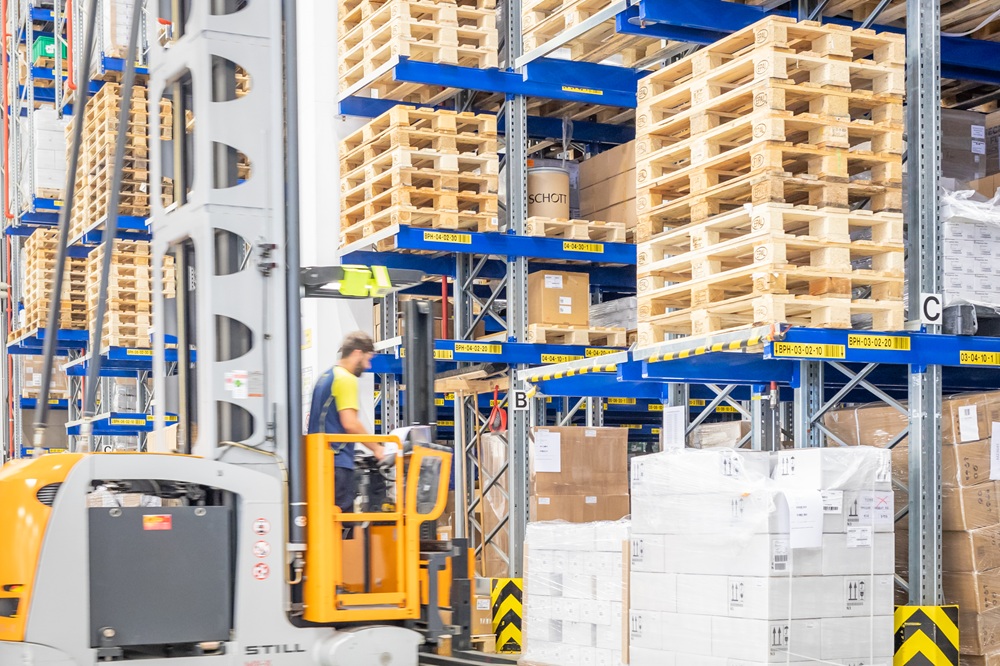
The tour then continued to the fulfillment area at Logistikkönner. There, the students learned about the individual steps in the process: from goods receipt, through the transshipment area and storage in the high-rack and small-parts warehouses, to order picking and returns management.
Many found the wide variety of customers and products particularly interesting. Whether DIY products, cosmetics, or other product categories: in fulfillment, a wide range of items and requirements must be handled efficiently. Since many participants work in industrial companies themselves and tend to deal with standardized products, this diversity offered an exciting insight into the challenges of contract logistics.
What Modern Logistics Must Achieve Today
Logistics processes today face a wide range of challenges. Large volumes of shipments must be processed efficiently, and processes must function reliably even under time pressure while remaining flexible enough to adapt to changes.
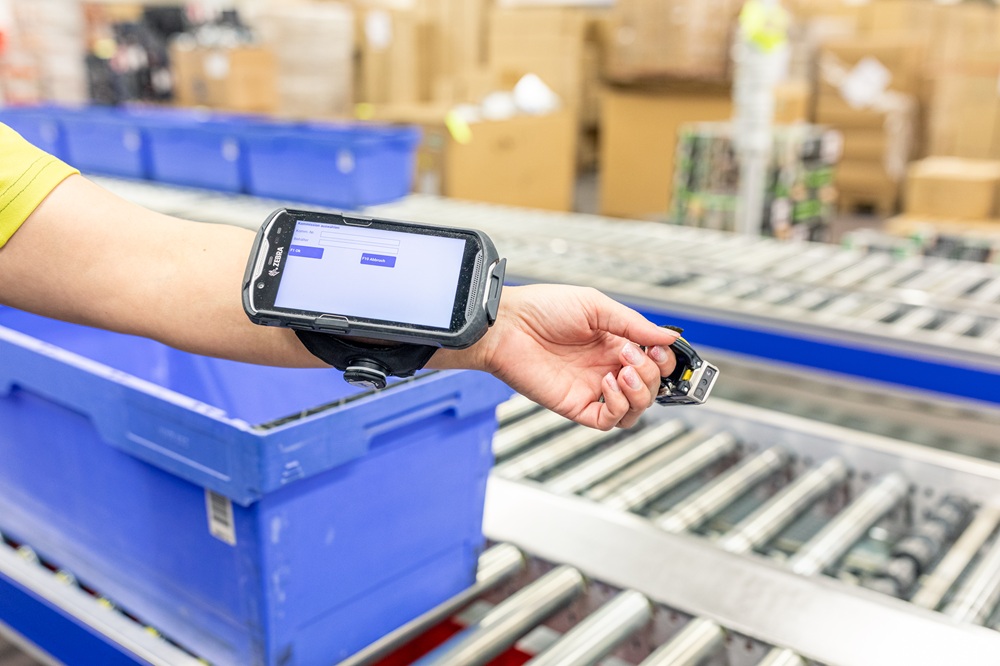
One topic that was discussed particularly extensively during the tour was digitalization. Among other things, the students were interested in the level of automation at Logistikkönner and potential future solutions such as AutoStore systems. Comparisons were also drawn with large e-commerce companies. At the same time, the existing zone-picking system and the digital solutions used by Liechtenstein Post generated a great deal of interest. The discussions highlighted how important it is to continually reevaluate processes and make sensible use of technical capabilities.
After all, technology alone is not enough. The interaction between people, processes, and systems also determines how efficiently and reliably a supply chain operates. For the students, the visit therefore offered an opportunity to view supply chain management not as a single discipline, but as an interconnected system as a whole.
What skills will the logistics industry of the future need?
As supply chains continue to evolve, the demands placed on specialists and managers are also changing. In addition to in-depth subject matter expertise, networked and analytical thinking are becoming increasingly important. Supply chain managers must be able to interpret data, optimize processes, and make effective use of digital technologies. At the same time, flexibility, risk management, and resilience are becoming increasingly important. Modern supply chains should not only be efficient, but also robust and adaptable. Despite increasing digitalization, one skill remains crucial: the ability to collaborate with people from different fields and across the entire supply chain.
Exciting discussions and new perspectives
After the tour, the participants wrapped up the evening with a group cocktail reception. This provided time for further questions, one-on-one conversations, and an open exchange of ideas. We were particularly pleased with the students’ positive feedback on the diverse services and processes offered by the logistics experts. At the same time, there were also constructive suggestions, such as regarding the use of paper packing slips in certain picking processes. Such feedback is valuable to us. It provides an outside perspective and offers new ideas for further developing existing processes.
Insights into the Region's Logistics Expertise
Geographical proximity also plays an important role for the BZBS. Through field trips, the educational institution aims to showcase the companies and skills available right here in the economic region. Die Logistikkönner offers an exciting environment for this: professional logistics processes meet modern technologies, high standards for process reliability, and the commitment to operate reliably every day.
The visit demonstrated once again how valuable the exchange between education and professional practice is. It was a pleasure for us to give the BZBS students a glimpse behind the scenes and, at the same time, to benefit from their questions and perspectives.
Many thanks to the BZBS, the program directors, and all participants for the engaging discussion and the visit to the logistics experts!

How can we help you? Just write to us.
"*" indicates required fields

